Foundry 1.1 · Current standard release
More range. More control. Still yours.
We're excited about what you can create with the latest Foundry releases. Explore distinct visual directions, build stories people can read, listen to or watch, and review clearer customer journeys while keeping your site yours.
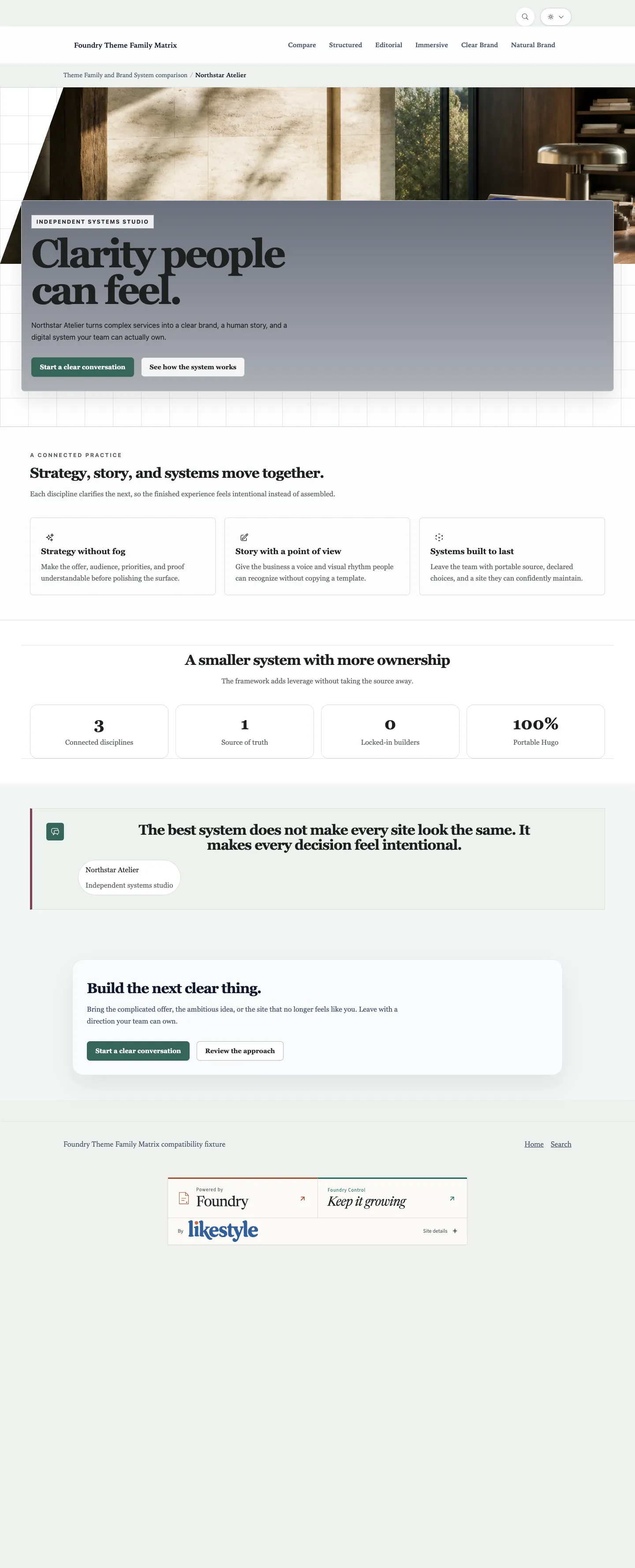
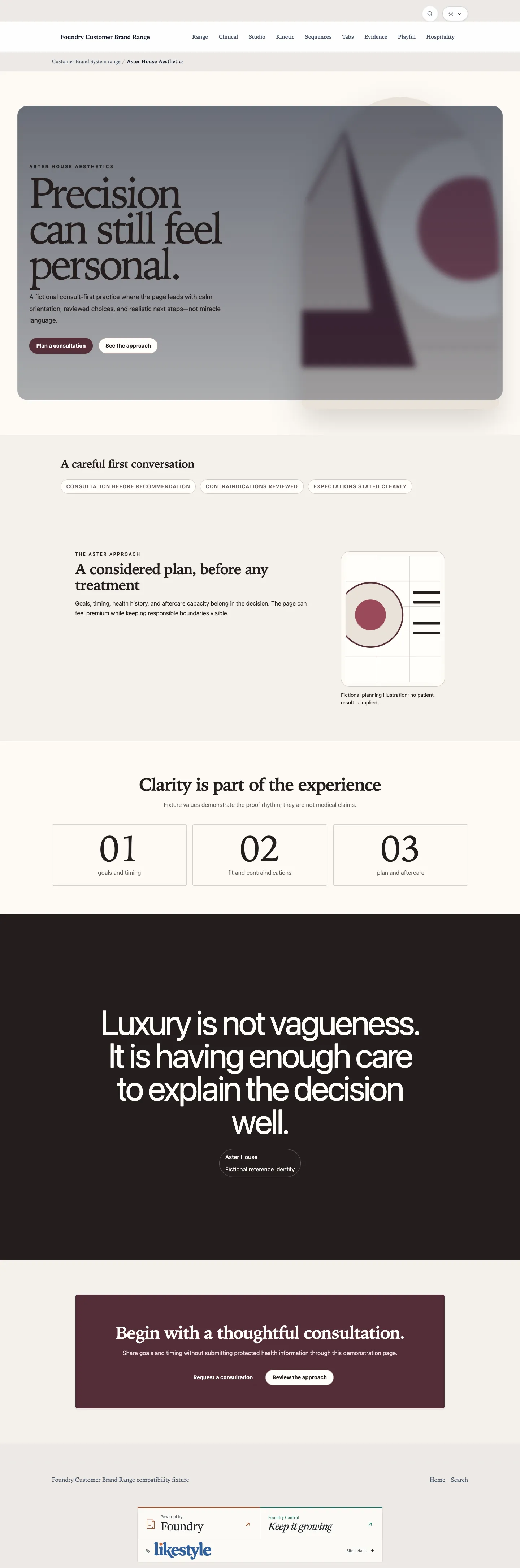
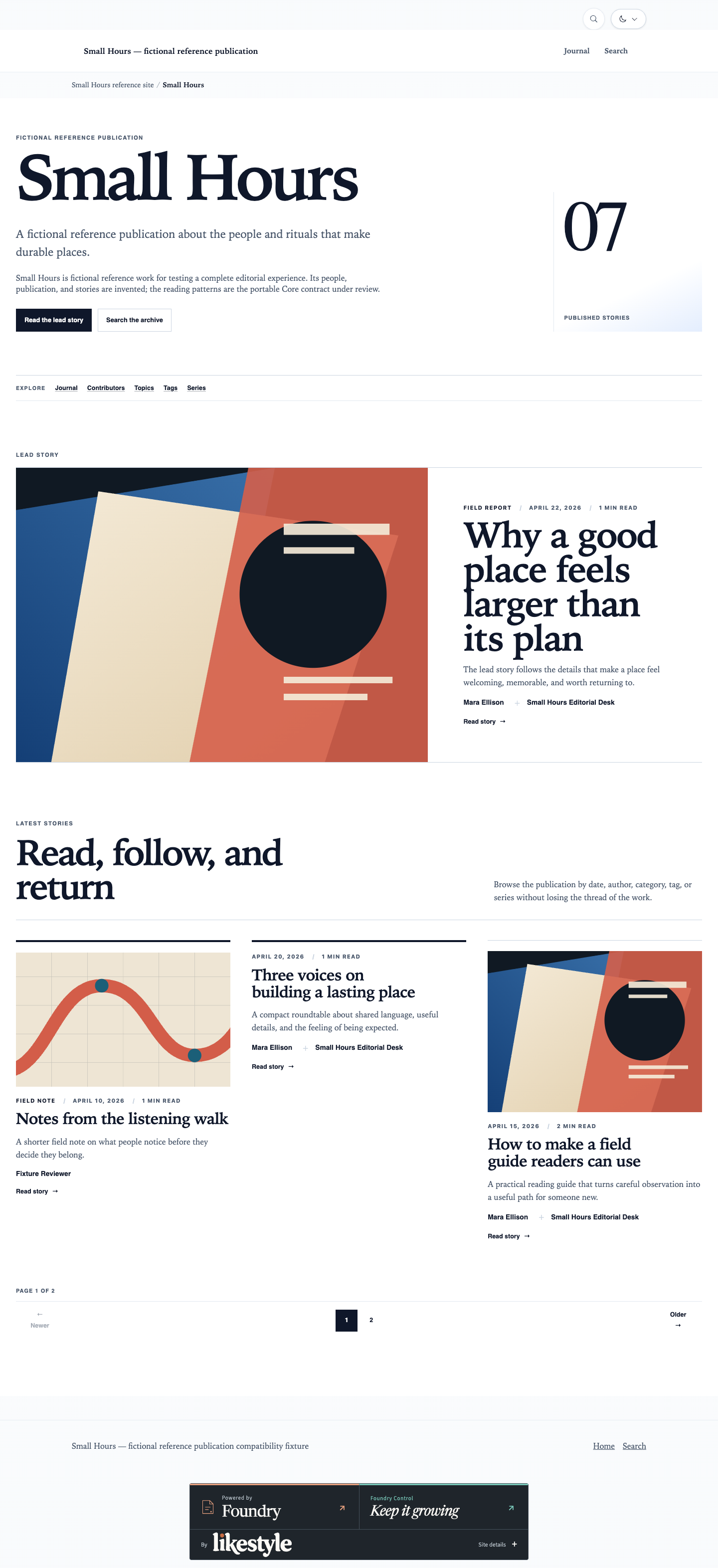
- Section families
- 18
- Page types
- 24
- Blocks
- 82
- Declared controls
- 416
- Visual examples
- 42
Current source-linked inventory from Core v1.1.29. Counts describe what can be inspected; they are not blanket release-readiness claims.
New possibilities. Same ownership.
Good ideas deserve
a bigger stage.
Give the work its own voice, its own rhythm, and a place to grow. Here are two things we're especially excited to help you make.
01 / Publication starters
Read it.
Hear it.
See it.
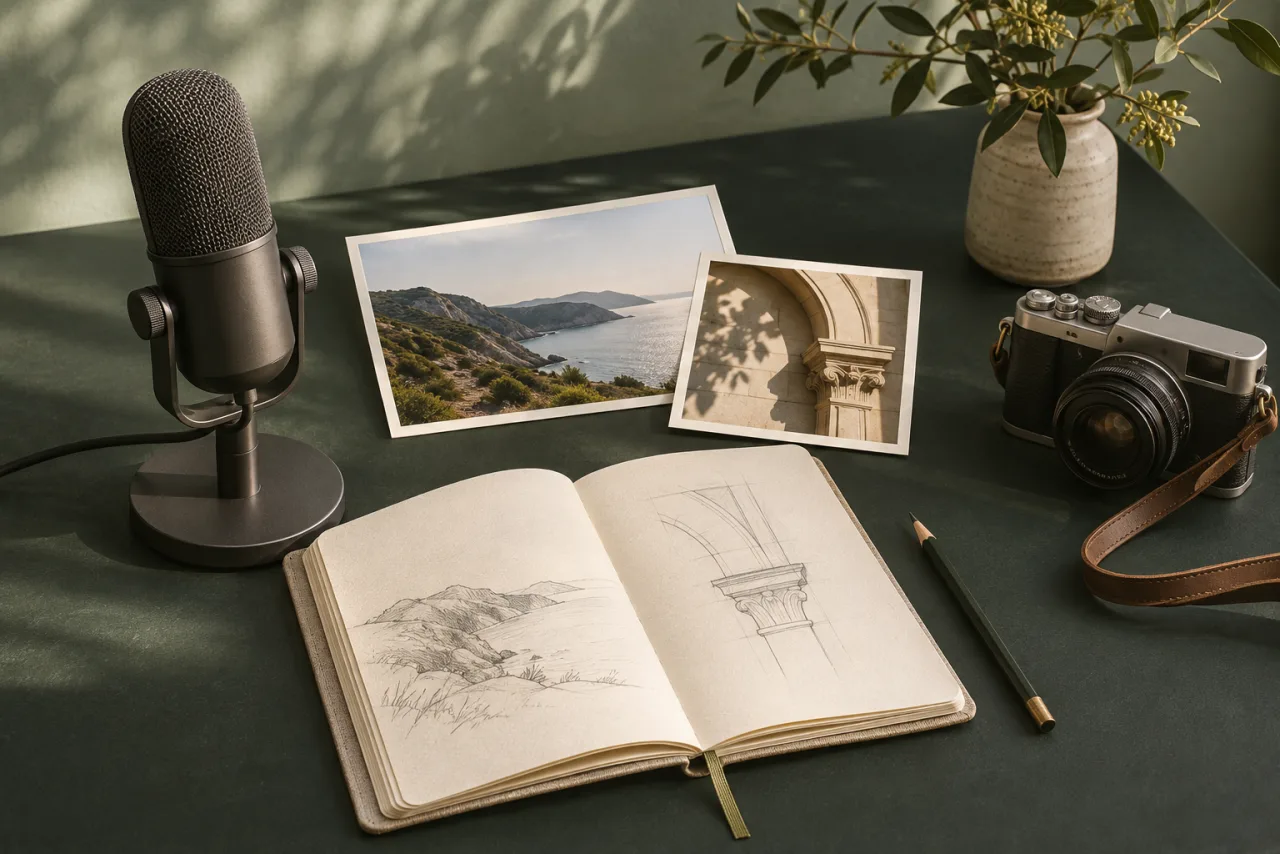
An essay. An interview. A film. A podcast. Start with a structure made for the story, then make it unmistakably yours. Pages, content and assets stay in ordinary site files.
Explore publication startersStarters are portable source. Your site's media delivery and publishing setup have their own adoption steps.
One idea. More ways to experience it.
01 Read
02 Listen
03 Watch
02 / Customer-journey reports
A good question.
A clearer next step.
Find the paragraph that answers a real visitor's question. Inspect a wording proposal, see exactly which source it touches, and decide what belongs on your site.
See customer-journey reportsCore's report makes no writes. Optional managed wording and draft review belong in Foundry Control and require their own configuration.
“What happens next?”
Your answer.
In your words.
The change in one sentence
A stronger system should create more freedom—not more dependence.
We’re excited to share the latest Foundry features and the possibilities they open up for your next site. You can explore a distinctive visual direction, give a story a home in text, audio or video, and inspect how a page answers a customer’s real question. The content, templates and assets remain yours to keep.
What we’re excited to help you build
- Stories with more ways in. Publication starters give articles, audio, video and podcast episodes a portable starting structure. Build a place to read, listen or watch, then follow the guide for your site’s media delivery and publishing setup.
- A clearer next step for your customers. Customer-journey reports connect a visitor’s question to the exact paragraph or supported prose field that answers it. Inspect a proposed wording change before changing the source.
- More room for your own creative direction. Compare the visual examples, then explore native CSS and shared fonts and responsive media to shape the details in ordinary site files.
Start with the feature that fits your next project. Each guide explains what is available, how to adopt it and which optional services need configuration.
Help customers find their next step
The current stable bundle adds customer-journey evidence and an optional native search experiment. A declared customer question binds to one exact paragraph or prose field; proposed wording has inspectable source preconditions. The portable report makes no writes and requires no private service.
AI-assisted owner work belongs in Foundry Control: confirm a business fact, request or write wording, review its complete diff, then conditionally save a private draft. Feature, Site and provider configuration remain explicit. A local model rehearsal is separate from a live provider or owner acceptance.
Everything since the previous portal update
The release changes and availability history accounts for every newly tagged Core and Control version since portal v1.3.10, with source and activation kept distinct. It includes native CSS and shared font resources, responsive media, publication starters and document contracts, tracking coverage, reviewed owner recovery and publication foundations, managed forms and email routing, workspace offers and the customer-journey foundation.
Read the native asset guide, responsive media guide, publication starters and tracking coverage guide for adoption details and limits. Existing sites retain their own release and compatibility decision. Historical docsets remain immutable.
Foundry v1.1.16
Logo Cloud now offers an independent Pause/Resume action so an explicit pause survives moving focus or the pointer elsewhere. Reduced-motion and no-JavaScript states keep original content available. This is a marquee repair; other motion capabilities retain their own validation requirements.
The current Core guide teaches working renderer fields and required service inputs. Human motion inspection explains available choices while retaining the same JSON contract. The delivery evaluation packet separates engineering checks from independent human, tool and fresh-machine attempts. Publishing this release does not claim those trials have occurred.
Local release verification
Core v1.1.29 makes the local verification lane explicit and retires its repository Actions definitions. Bounded actual browser identity and focus diagnostics improve failure evidence while preserving native keyboard assertions. This verify-only update retains the customer-journey foundation and default-off search behavior. Local browser results, compile-only portability evidence, consumer adoption and managed activation keep their separate limits.
Public audio, video and podcast permission
Tagged Control v0.6.52 source adds explicit public-media permission for one Site, declarations for direct files and confirmation for shows. Private history remains restricted. Stopping new work preserves existing public files; explicit continuation retains file addresses, show and episode identities and requires current permission and another website review. This is a disabled deployment candidate: installed workflow, actual delivery, owner playback and publication require their own qualification. The selected v0.6.51 cutover and Core/Distribution versions remain separate.
One identity · Every site
A Foundry signature that belongs on any brand.
The shared footer now reads as a compact split product surface: Powered by Foundry, Foundry Control — Keep it growing, a LikeStyle signature with the colored i dot, and expandable Site details for release identity. Its color, typography, focus, and responsive behavior are Core-owned, so light, dark, and strongly branded footers cannot accidentally make it disappear.


- Two fail-visible product links: Foundry and Foundry Control
- Site, bundle, and Core release details stay behind an accessible disclosure
- LikeStyle identity stays visible without crowding the customer footer
- No consumer content migration is required for normal Foundry-rendered pages
The Foundry promise
Make something distinctive. Improve it safely. Keep the whole thing.
Foundry Control can add managed editing, approvals, publishing, analytics, contacts, communications, and automation around the work. The portable site remains useful without it.